


Over 90 children, young people and adults with special needs from Radomir, Blagoevgrad, Sofia and Plovdiv took part in the activities of the international youth exchange organised by the ‘For Tomorrow’ Foundation
A few days ago, the fourth project of the year by the Blagoevgrad-based “For Tomorrow” Foundation – “G.A.M.E. for Inclusion” – funded under the “Erasmus+” programme, came to a close. The project has become the organisation’s largest initiative to date in terms of the number of participants and the active involvement of people with special needs.
But behind the figures lie more than just events held and new skills learnt. Behind them lie encounters, friendships, laughter, anxieties overcome and, above all, the experience of being part of a community where everyone has their place.
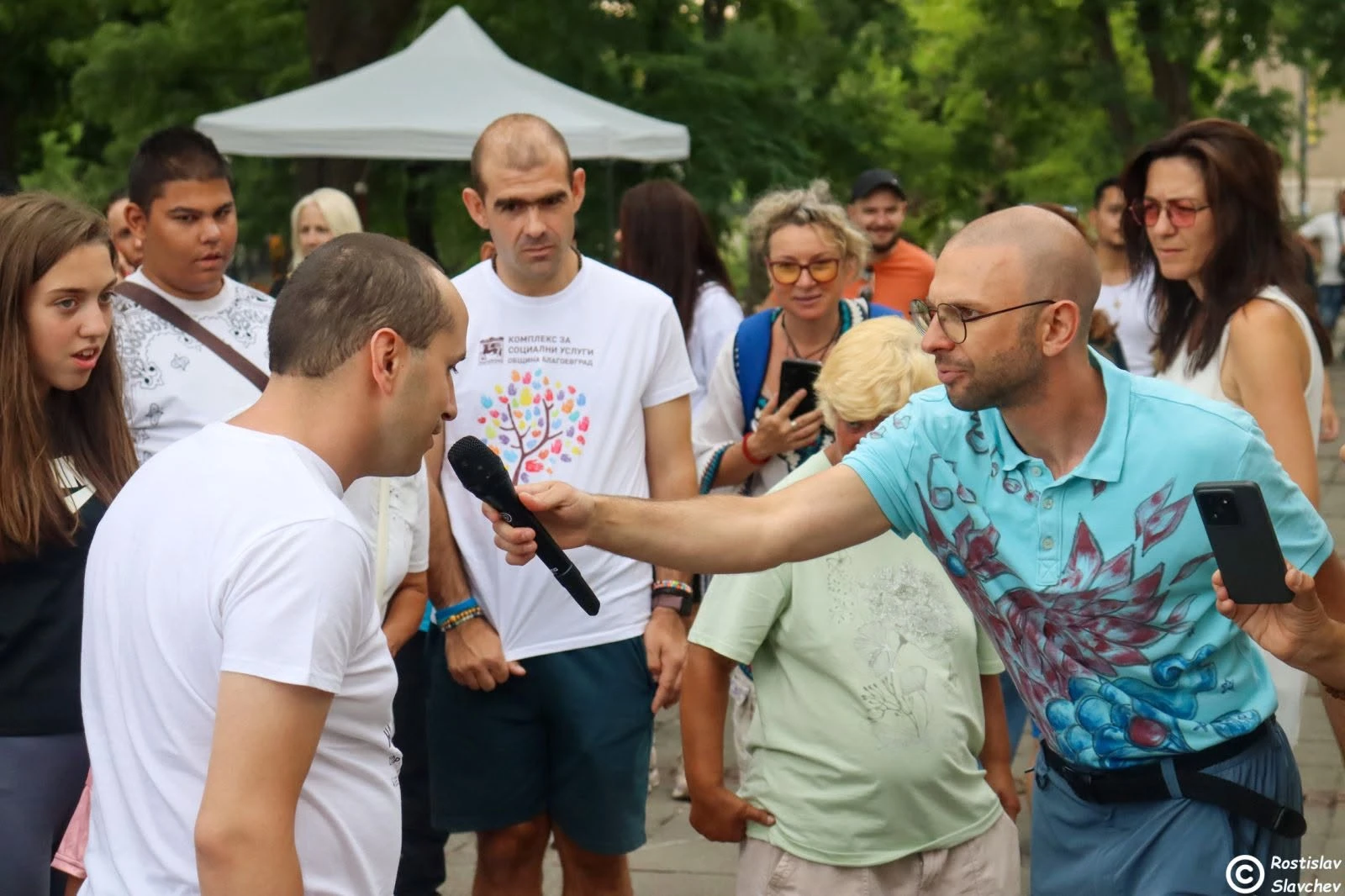
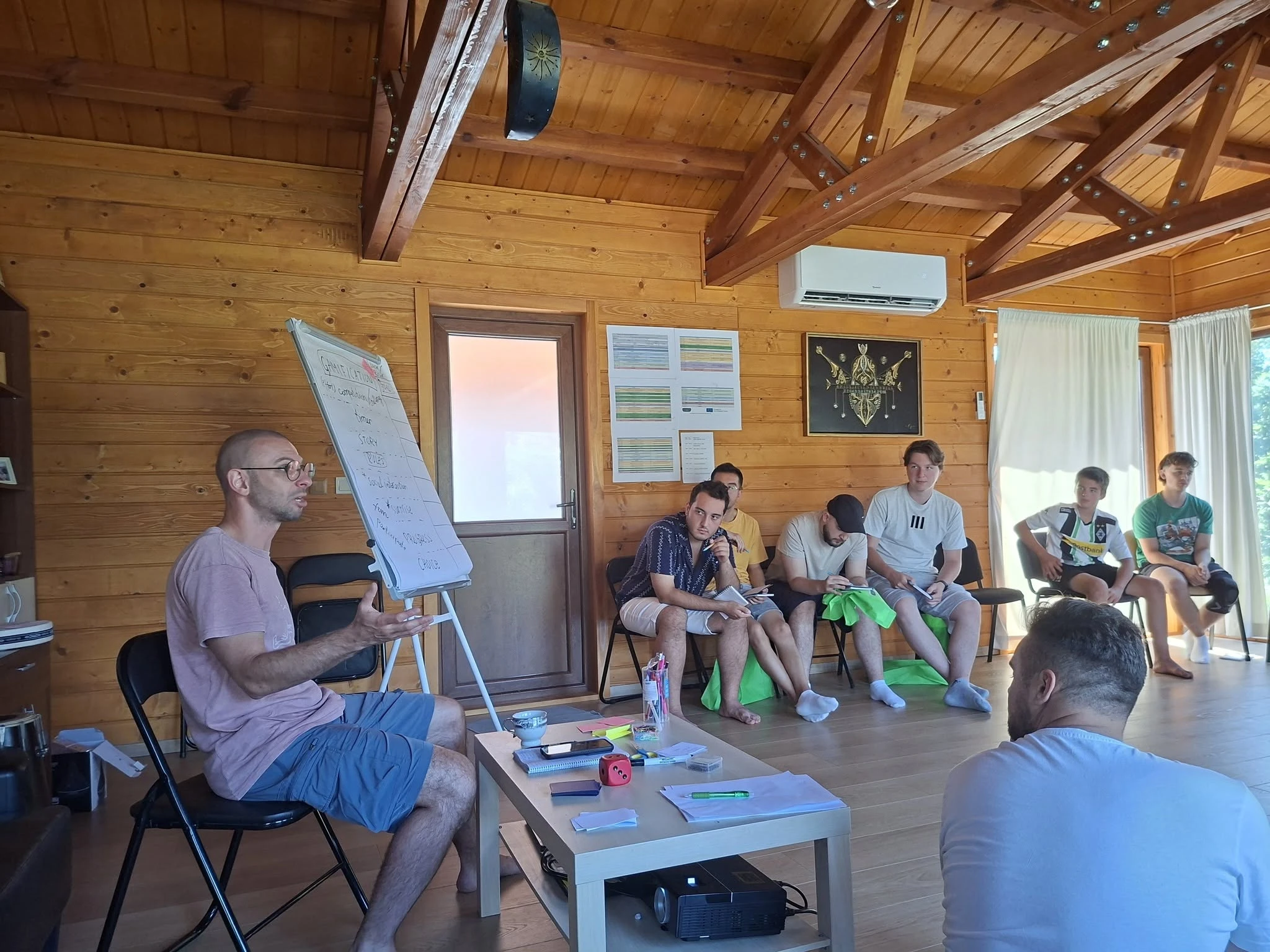
The main focus of the international youth exchange was play as a tool for non-formal education and as an effective means of social inclusion for young people with learning difficulties. Through sport, team challenges, group games in the great outdoors and interactive games, the participants had the opportunity not only to have fun, but also to develop skills in communication, cooperation, coordination, following instructions and teamwork.
The project was carried out jointly by young people from Bulgaria, Croatia and Turkey – the ‘For Tomorrow’ Foundation, the Plovdiv-based ‘Parallel World’ Association, the Croatian organisation ‘Eutopia’ and the Turkish organisation ‘Back to Nature’, which are developing a sustainable partnership under the ‘Erasmus+’ programme in support of young people with special needs. The Municipality of Radomir was also a key partner in the implementation of the activities.
The youth exchange took place in the village of Dolni Rakovets, near Radomir, whilst individual initiatives were organised in Radomir and at the Kremikovski Monastery. The choice of different locations enabled the project to reach a wider audience and involve more children, young people and people with special needs from the region.
Sixteen young people and three group leaders took part directly in the international mobility. Representatives from the three countries exchanged traditional cultural games, cooperative games and activities aimed at fostering collaboration and team-building.
The participants also learnt about the principles of ‘gamification’ – the creation and adaptation of games to suit the capabilities and needs of different target groups, so that people with different abilities and skills can take part.
The knowledge gained was not confined to the international exchange alone. During the project, the young people developed and adapted traditional, cultural and interactive games from their own countries and presented them to a wide range of children and young people with special needs from the region.
Play as a bridge between people
Among those directly involved in the project activities were children, young people and adults from social services in Blagoevgrad and Radomir, as well as their families. From Blagoevgrad, the following organisations took part: the ‘St John of Rila’ Family-Style Accommodation Centre for Children and Young People with Disabilities, the ‘Struma’ Sheltered Home for People with Intellectual Disabilities, and the ‘Sunny Home’ Sheltered Home for People with Intellectual Disabilities. From Radomir, representatives from the Community Support Centre, the Centre for Social Services for Children and Young People with Disabilities, and the “Vurba” Day Centre took part, with the support of resource teachers and volunteers from the “Buchaloto” Association.
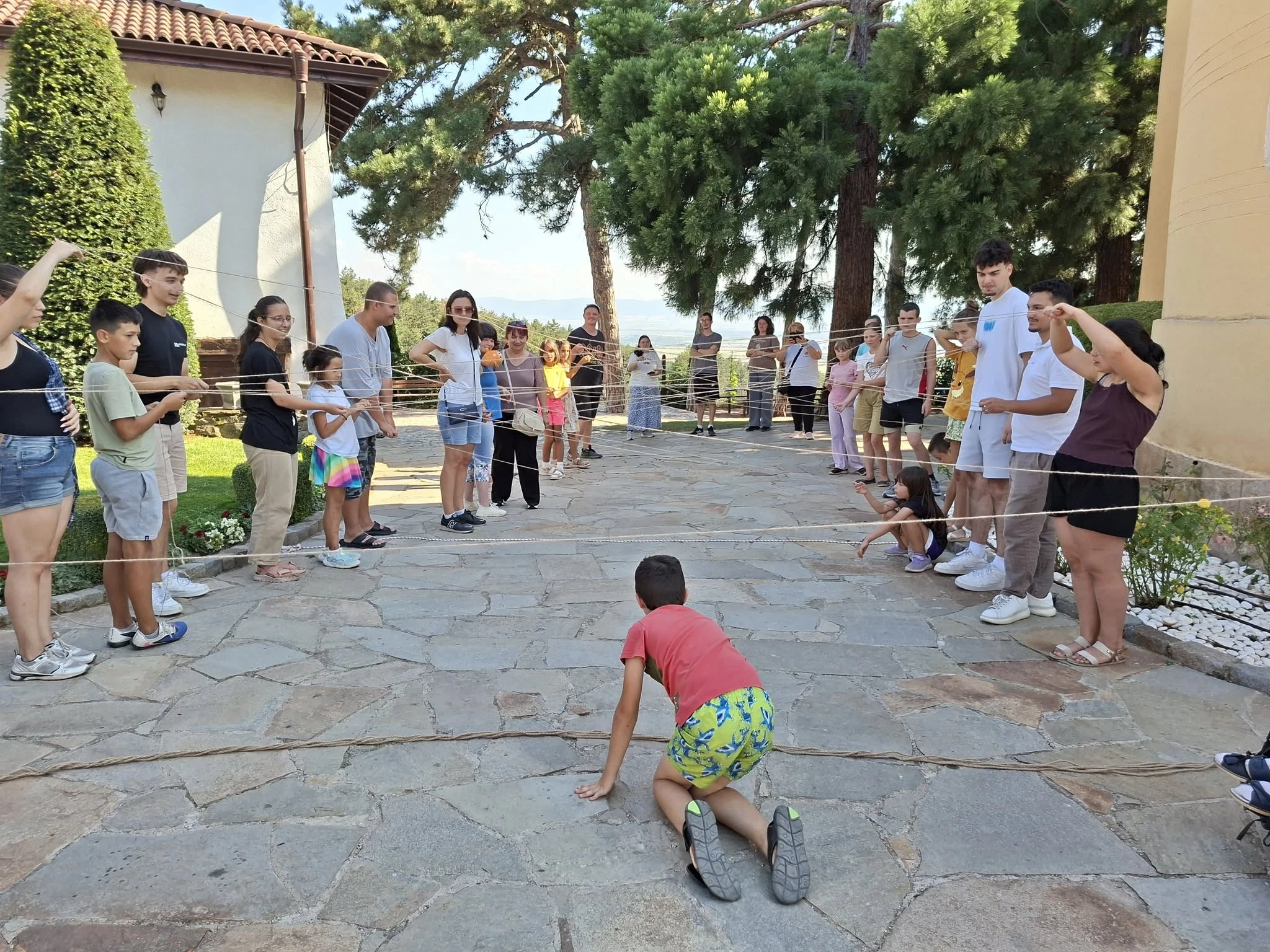
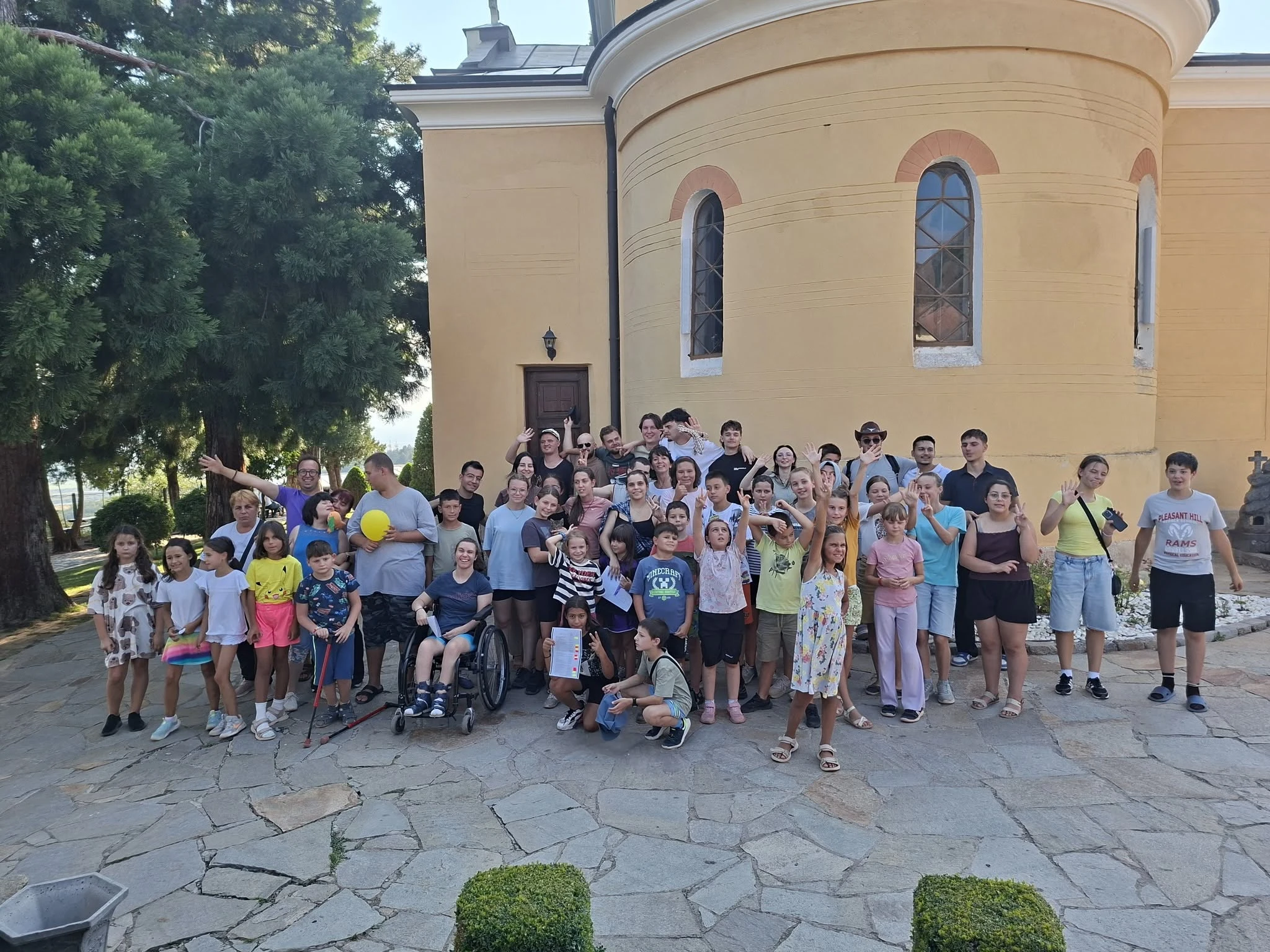
On 7 August, a special event for children aged between 7 and 13 took place at the Kremikovski Monastery, attended by 40 children, including those with special needs. They were quickly welcomed by their peers and took part alongside them in sports relays, games exploring group dynamics, cooperation and teamwork, as well as activities designed to develop coordination and the ability to follow instructions.
The event demonstrated, in the most natural way, the power of a play-based approach – the children quickly shook off their shyness, joined in the group activities and turned their differences not into a barrier, but into part of the shared experience.
Nature, exercise and culture
The project also included a range of ‘green activities’ that linked social inclusion with caring for nature. The participants made bird feeders and signs bearing motivational environmental messages, which were placed in Dolni Rakovets and along the Eco Trail near the village – an area developed and maintained by young people who had taken part in previous projects run by the ‘For Tomorrow’ Foundation.
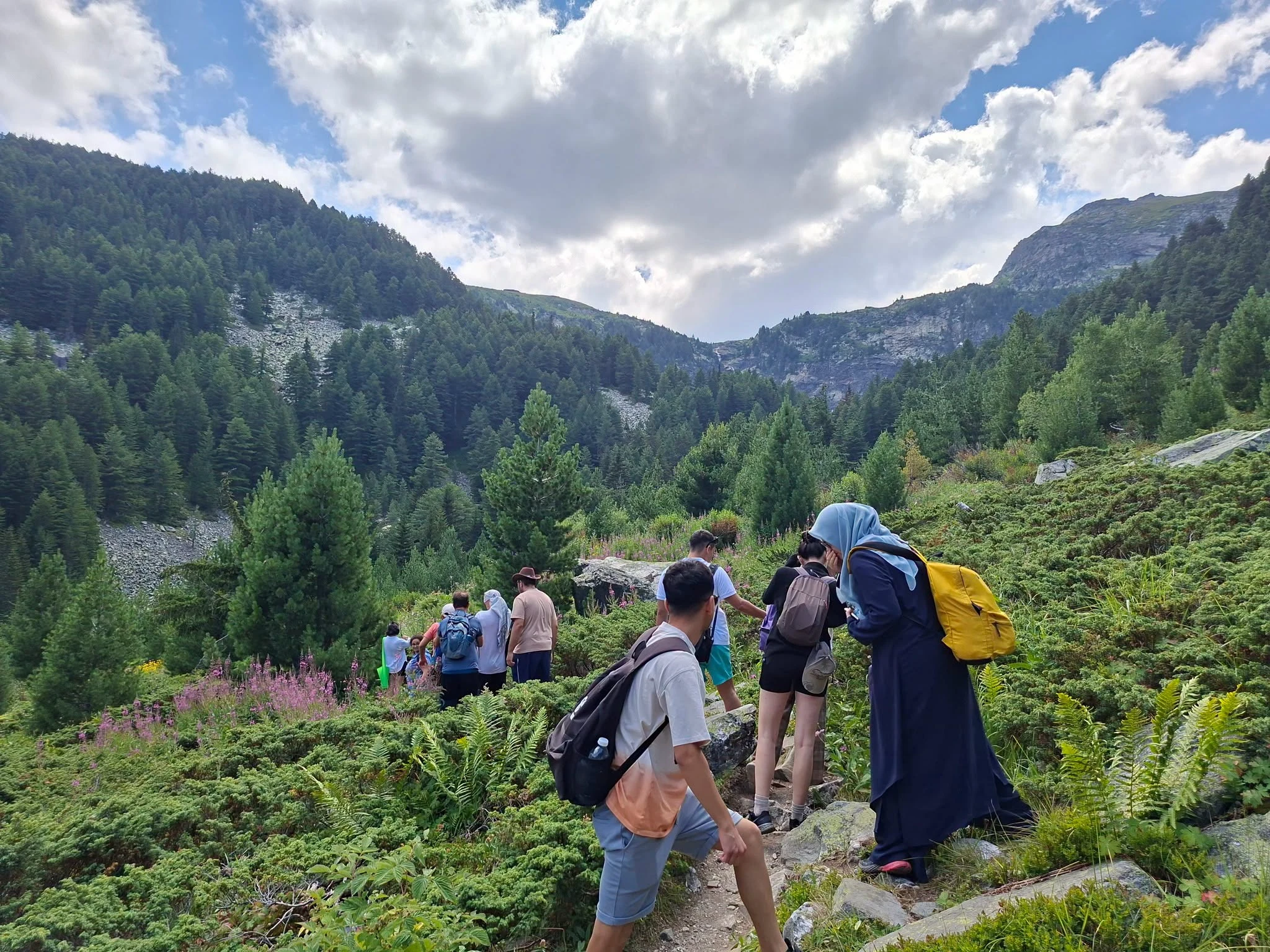
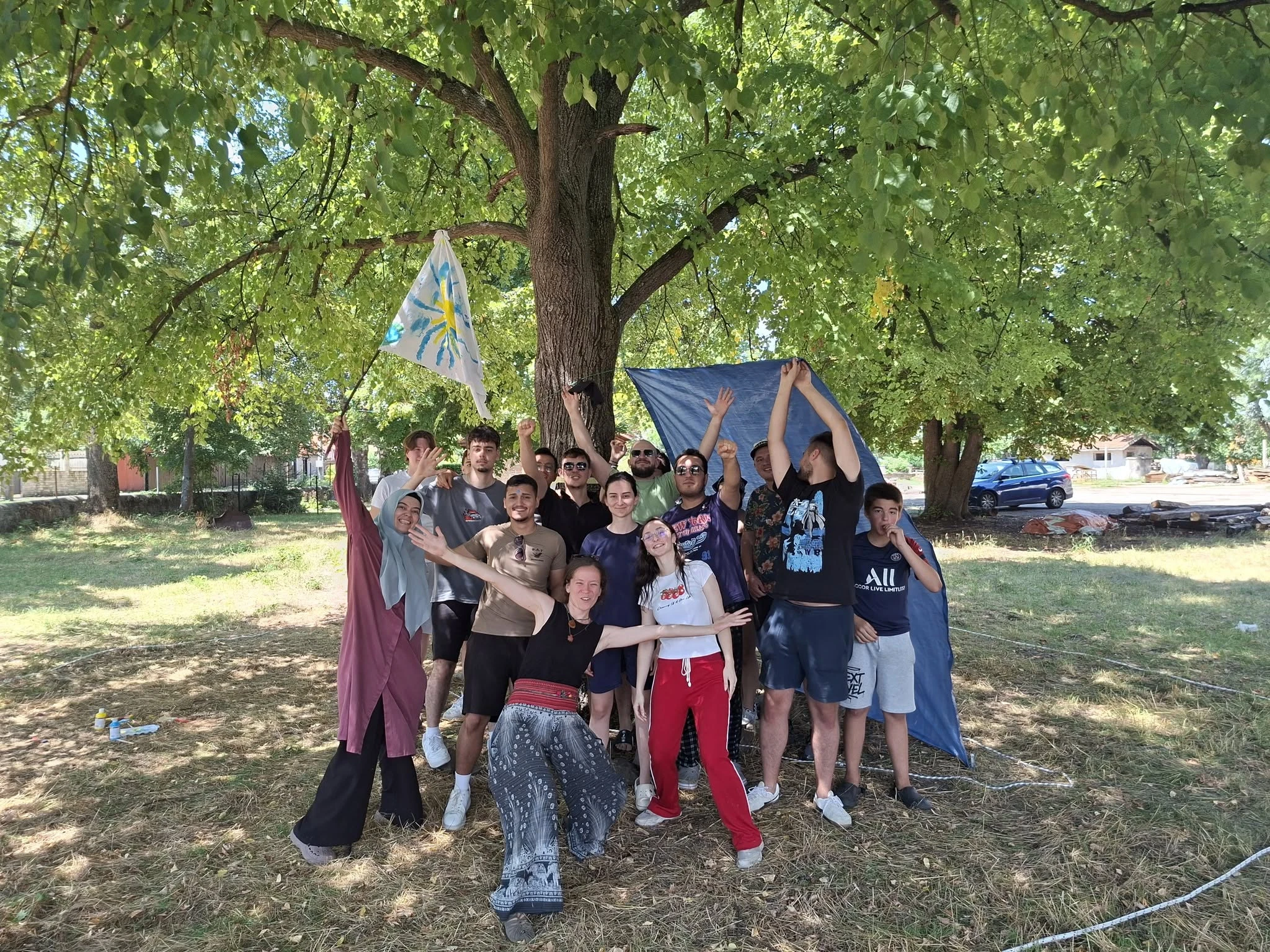
The programme also included an excursion to the Polska Skakavitsa waterfall, as well as water games and fun at the swimming pool in Sapareva Banya.
An equally important part of the exchange was intercultural learning. During the cultural evenings, the participants learnt about the history, traditions and contemporary life of Bulgaria, Croatia and Turkey. They played ‘Kahuut’, sampled traditional dishes, listened to music and danced together. In this way, the cultural exchange became not merely a presentation of facts, but a vivid, shared experience.
“Let’s Play Together” – the project finale
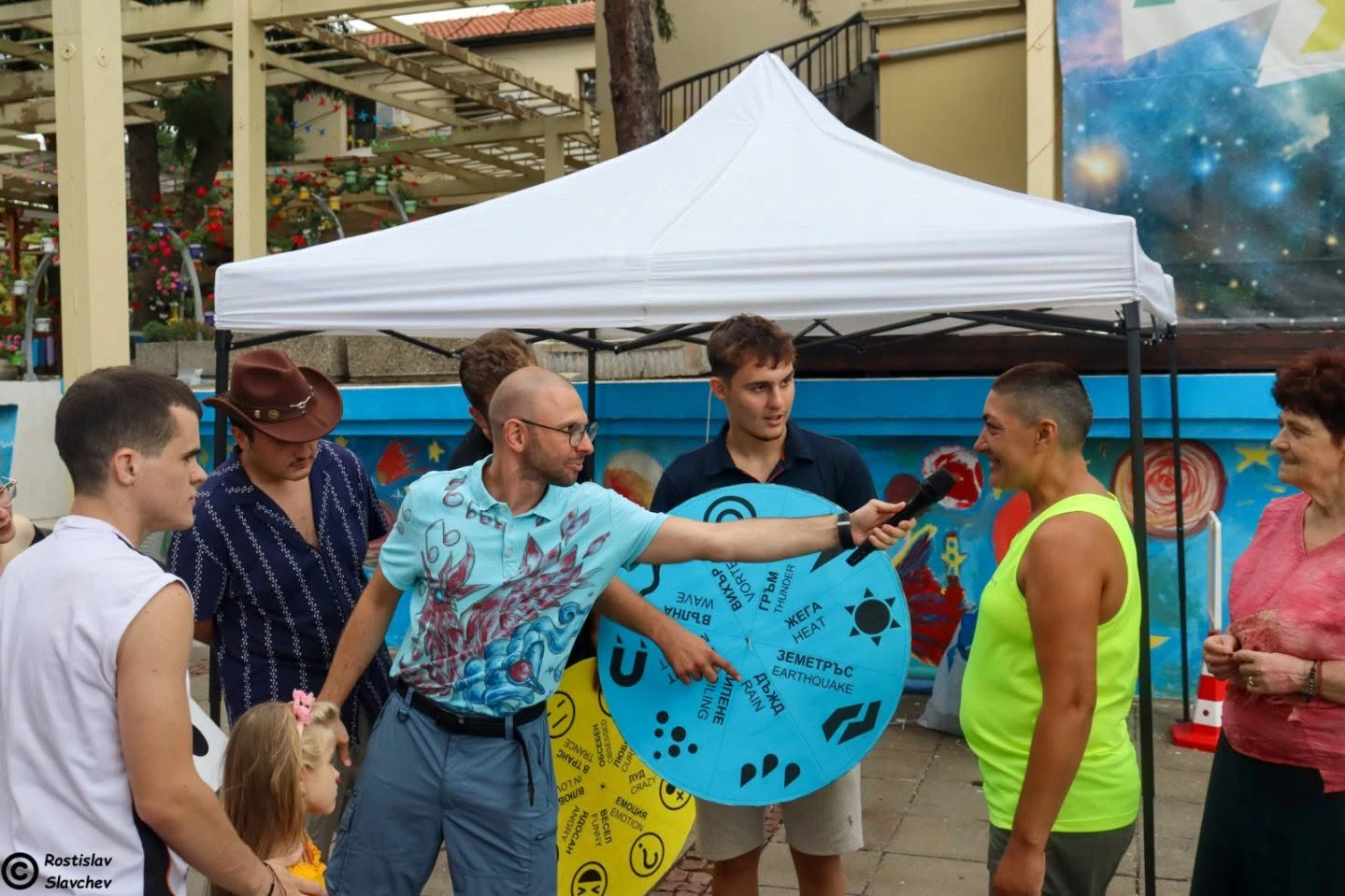
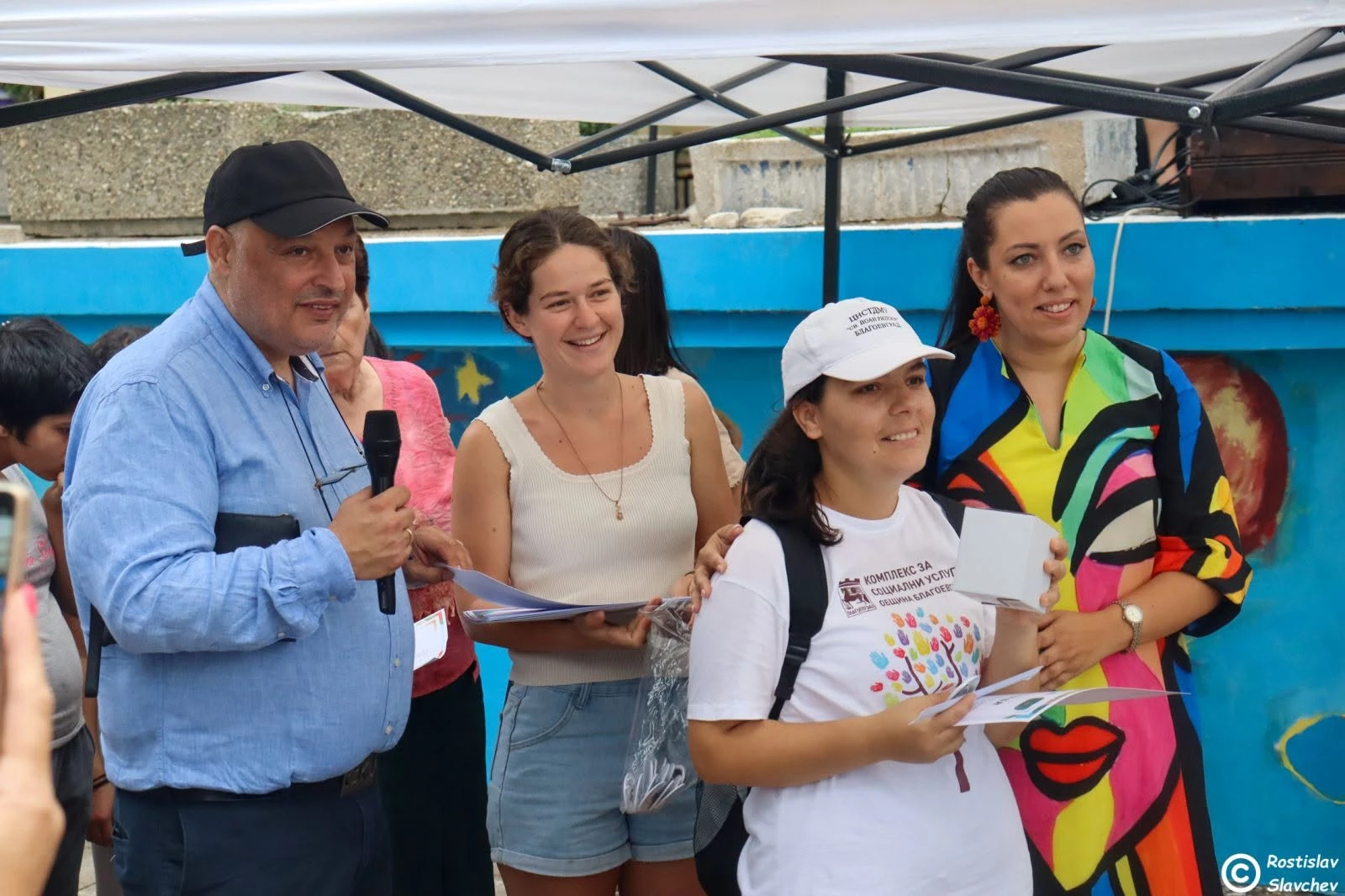
The final and largest event of the project took place on 8 August at the “Europe” Youth Cultural and Information Centre in Radomir under the motto “Let’s Play Together”.
With the support of Radomir Municipality, the event brought together more than 50 children and young people with special needs from Blagoevgrad, Radomir and Plovdiv, who, together with their parents and representatives of various social services from the region, spent several hours playing games, being active and having fun.
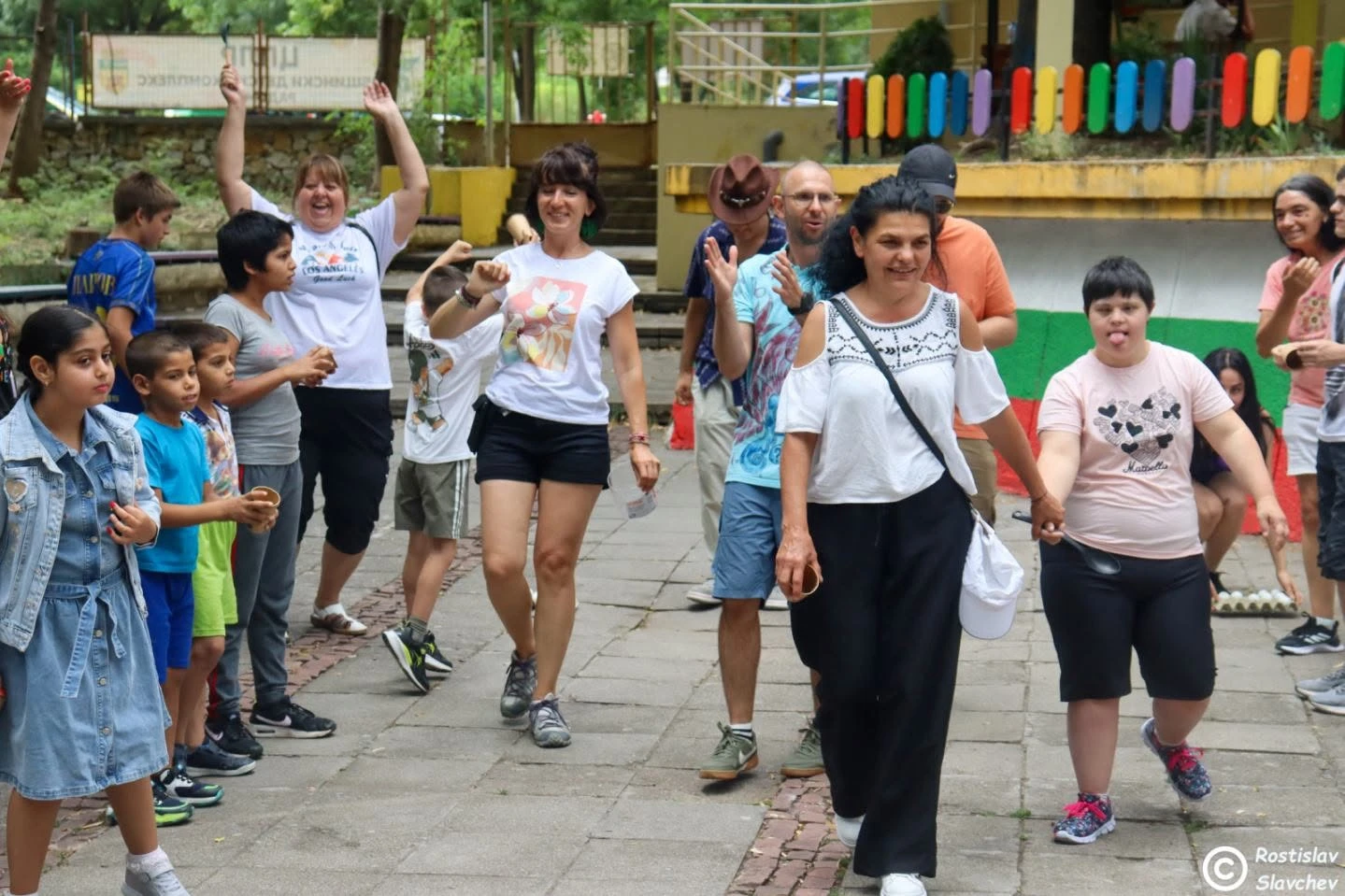
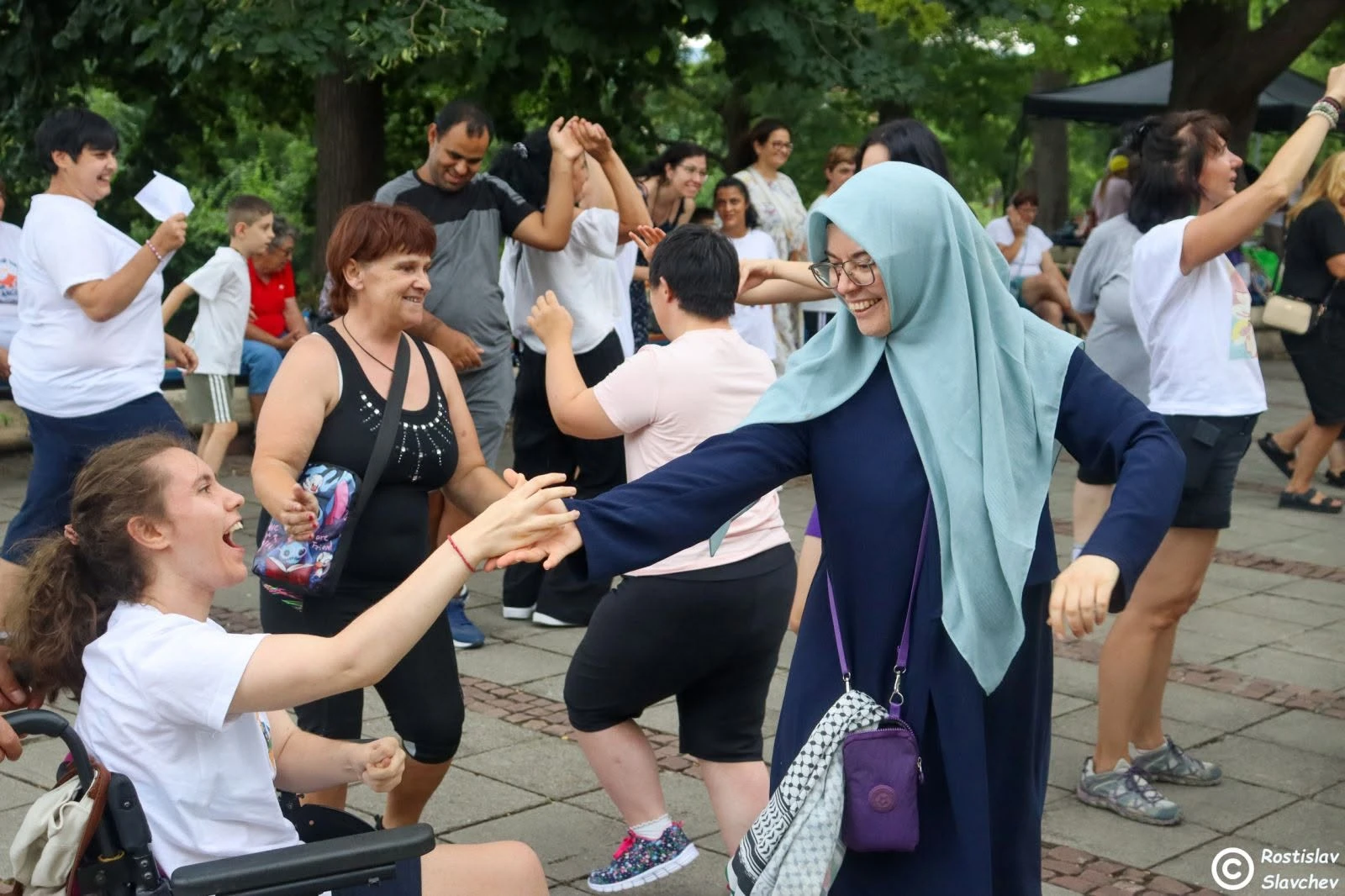
The programme offered a variety of sporting challenges, outdoor games and team competitions. All activities were tailored to the participants’ abilities and focused on socialising, cooperation, teamwork and shared experiences.
Through play, the participants practised and developed skills such as coordination, following instructions, sportsmanship and teamwork. But the most important outcome was simple and clear for everyone to see – children and young people with different abilities played side by side, supported one another, laughed and shared the success of being part of a team.
“One of our main goals is to create an inclusive environment and encourage cooperation between young people with different abilities. In this way, we not only help to develop the potential of children with special educational needs, but also create an informal network of active citizens from the participating countries, who are then ready and able to bring about positive change in their communities,” explained Borislav Slavchov, coordinator and trainer at the “For Tomorrow” Foundation.
Throughout the ‘Games for Social Inclusion’ project, the international participants experienced genuine joy in interacting with the children and said that the exchange had radically changed their views on working with children and young people with special needs. Many of the young people from Turkey and Croatia expressed a desire for further training in play-based methodology and provided feedback that the events at the Kremikovski Monastery and in Radomir had developed their skills in entrepreneurship, event planning and adapting their activities to the group of participants.
This is precisely one of the project’s long-term objectives – for young people not merely to acquire new knowledge and tools, but to become agents of change within their own communities. The exchange of play-based methods from the three countries, including traditional outdoor games, enabled participants to see how a simple tool such as play can break down barriers, build trust and bring people closer together.
The ‘Games for Social Inclusion’ project builds on and expands the series of initiatives by the ‘For Tomorrow’ Foundation, co-funded by the Erasmus+ programme, aimed at the social inclusion of young people with special needs and at changing public attitudes towards them.
Because inclusion doesn’t start with grand words. Sometimes it starts with an invitation to play.
About the ‘For Tomorrow’ Foundation
The ‘For Tomorrow’ Foundation in Blagoevgrad works to improve the quality of life for people with special needs and to ensure their full participation in society. The organisation promotes the exchange of knowledge, best practice and mutual support between specialists and families, whilst supporting the development and social integration of children and young people with special needs.
PHOTOS / VIDEO